
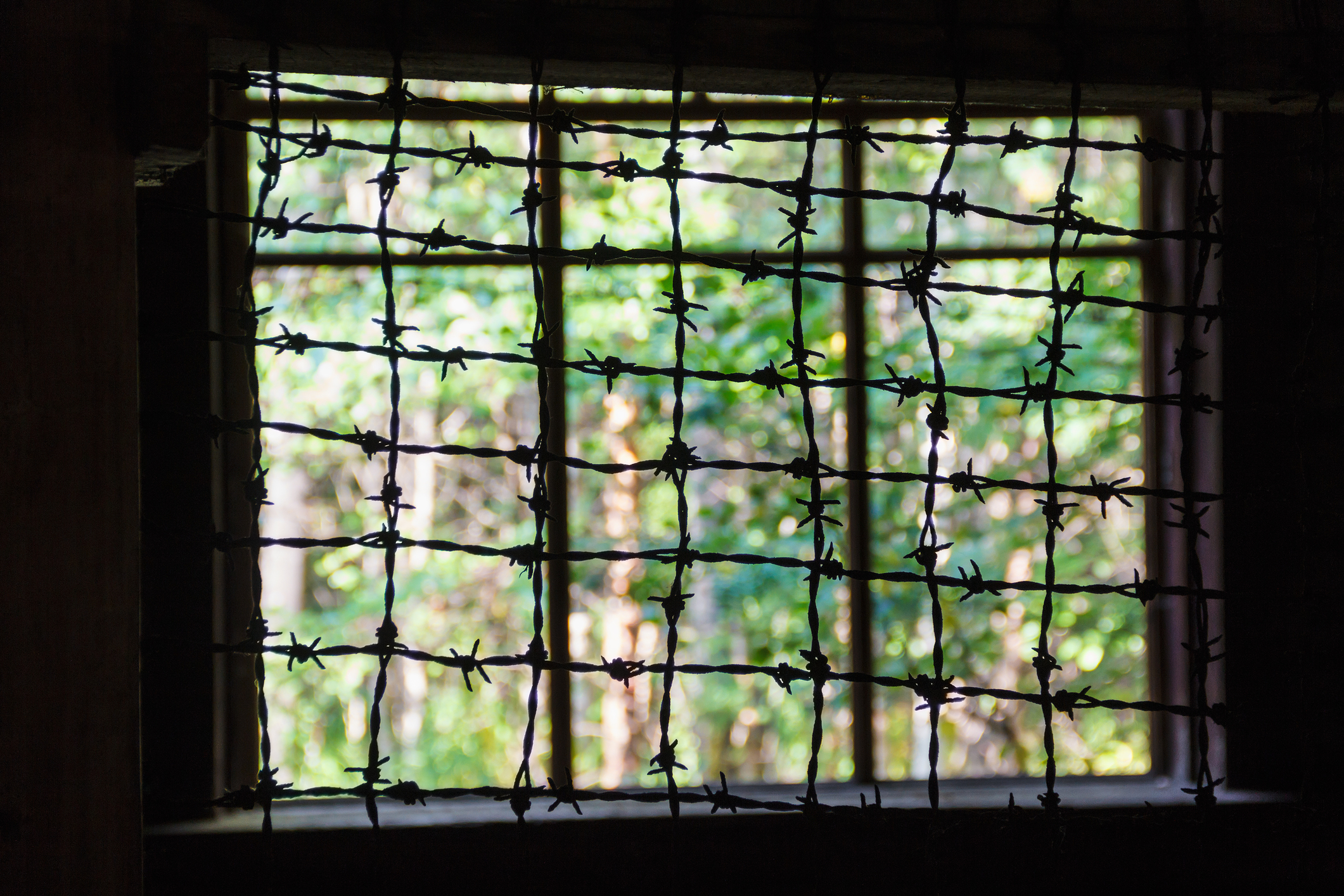
In each and every generation they rise up against us to destroy us. And the Holy One, blessed be He, rescues us from their hands.- Passover Haggadah
PROLOGUE
This essay, drawing from the memoirs of Anatoly Rubin (z”l) and Avraam Shifrin (z”l), offers a small glimpse into the lives of these extraordinary heroes. Since readers in the United States, especially the younger generations, may have difficulty imagining the circumstances and preoccupations of these heroes, this prologue serves as a bridge for readers that have not been exposed to the realities of life under dogmatic and repressive regimes such as the USSR.
Most of the events in this story occurred during the rule of Nikita Khrushchev (1953–1964). This period was one of begrudged and ever so slight transition from the extreme terror of Stalinism to a marginally more relaxed—but still repressive—form of dictatorship. However, the Gulag system—the Soviet premier institution comprising a network of prison labor camps—was still in place and held millions of prisoners under vague or fabricated charges.
The censorship regime was likewise only slightly loosened. Western books, music, and ideas were mostly banned, but Soviet youth began secretly listening to jazz and rock ‘n’ roll on smuggled records. The state controlled all media, down to the smallest publication, and criticizing the government would still land someone in prison or exile. Religion remained suppressed, with synagogues almost nonexistent, churches closed, and believers harassed.
Daily life was marked by long lines, shortages of basic goods, and crowded communal apartments. The government promised a bright communist future, but the reality for most people was morose and difficult. Jobs and (substandard) housing were guaranteed, but wages were low. Education and science were heavily promoted, but always under strict ideological control. While Khrushchev was less brutal than Stalin, the USSR under his rule was still a one-party police state, and personal freedom remained extremely limited.
Under the Soviet system of totalitarian control, the Jewish national movement—and especially Zionism—was treated as a unique and dangerous threat. While all forms of independent political or cultural expression were suppressed, the regime gave particular attention to crushing any signs of Jewish identity that extended beyond “Soviet nationality.” Zionism, the idea that Jews have a right to their own state in Israel, was labeled a form of “bourgeois nationalism” and “cosmopolitanism,” both considered treasonous in the eyes of the Communist Party.
Jews who showed interest in Israel and religious life, studied Hebrew, or applied for emigration to Israel were subjected to surveillance, job loss, public shaming, and often imprisonment. Teaching others about Jewish history or culture in any way that did not conform to the party line was considered subversive. Soviet propaganda portrayed Zionism as a tool of Western imperialism, accusing Jewish activists of treason and often charging them with espionage. When imprisoned these Jews were referred to by their Western supporters as Prisoners of Zion.
THE FIRST MIRACLE – The Miracle of Infiltration: The book is acquired in the US and shipped to the Gulag
In 1960, shortly after his second imprisonment for his Zionist beliefs, Anatoly Rubin found himself in a labor camp in Mordovia imprisoned with a person whose name, unfortunately, has been lost to time, but who played a pivotal role in this story. All we know about this person is that he was a writer. Since he played such a critical role in the events described here, we will refer to him as Writer. He was one of the few Russians in the camp who maintained friendships and openly sided with the Jewish prisoners against relentless antisemitic attacks by other inmates as well as guards. Due to his past writings about Lenin, he enjoyed privileges that ordinary prisoners could not dream of. Among other things, he was granted access to a wide range of literature, including foreign publications, an extremely uncommon privilege in the USSR in general and especially in the Gulag.
For an American-born reader, this might seem unimpressive: foreign books, big deal. But in the USSR—essentially one enormous prison labor camp—every book was thoroughly vetted by the KGB before import (or even publication)—so finding a copy of Exodus in a labor camp was nothing short of miraculous.
Since we do not know why Writer was imprisoned, we can only speculate as to how he managed to obtain a copy of Exodus. I doubt he needed it for his new book about Lenin or Khrushchev. Somehow, for one reason or another, a copy of Exodus was likely acquired in the United States and made its way to the USSR. There, in the Gulag, Exodus passed from good-natured Writer, who likely never grasped its significance, to Anatoly Rubin.
THE SECOND MIRACLE – The Miracle of Accession: Prisoner of Zion A. Rubin is shown the book
In his memoir, Rubin recounted the fateful encounter with Writer. One day, Writer approached Rubin and said, “You know, Tolya, there’s a book in English called Exodus. It’s about Israel and other Jewish topics. Take it, read it—you’ll probably find it interesting.”
Though Rubin’s English was not particularly strong, it was good enough to grasp the significance of the book he had just been given. Among the prisoners were some Jews who had good command of English, and relatively soon they all found themselves in a secluded spot within the labor camp reading the book together. Within three days, they had finished it.
It is difficult to put into words just how deeply Exodus moved them. In the harsh reality of the labor camp, Jewish prisoners were desperate for any trace of Jewish national culture. They scoured Soviet newspapers and magazines, searching for even the smallest reference to Am Yisrael.
And then, suddenly, they had found Exodus, a real treasure.
Writer, though clearly a decent and compassionate man, was likely neither well-versed in Zionism nor familiar with the fundamentals of Jewish civilization. Yet, somehow, he managed to connect with the right person—someone willing to risk his life to ensure that Exodus fulfilled its purpose. The fact that this person turned out to be Rubin, of all possible inmates, was nothing short of miraculous.
Rubin was not only deeply committed to Zionist ideals, but he also possessed extraordinary organizational talent. Before his imprisonment, he had used his remarkable skills to build an underground network that distributed Jewish literature and information about Israel, keeping the flame of Jewish identity alive in the face of the oppressive Soviet regime.
Whether Writer was aware of Rubin’s background remains uncertain. Yet, in the end, the whims of fate—and the will of G-d—had placed the book in the hands of the perfect messenger, a man who would help Soviet Jews reclaim their sense of peoplehood.
THE THIRD MIRACLE – The Miracle of Gifting: Writer gifts the book to Rubin
After reading it, Rubin couldn’t bear the thought of parting with the book and decided to plead with Writer to let him keep it. To his surprise, Writer handed it over willingly. Rubin’s joy was immeasurable. He struggled to find the words to thank him, and according to his memoir, even years later, he still felt a deep sense of gratitude.
Once Exodus was in his possession, Rubin’s first priority was to conceal it, ensuring it would not be detected and confiscated during the frequent KGB searches. While Writer, thanks to his privileged status, was permitted to keep the foreign books, a common prisoner like Rubin certainly was not. In the harsh reality of the labor camp, the old adage quod licet Iovi, non licet bovi—what is permitted to Jupiter is not permitted to the ox—proved all too true.
As we will see throughout this story, necessity is the mother of ingenuity, especially in the Gulag. A trusted inmate who had once taken a bookbinding course skillfully camouflaged Exodus by replacing the cover with that of a book printed in the USSR. During the numerous searches that followed, guards would pick it up, flip through its pages, and see the front cover and following page, both of which bore the title in Russian: English Stories by Mark Twain, a student textbook.
The false title provided perfect cover and was never questioned. The book remained safely hidden among a stack of other English materials—self-study manuals and Soviet-published stories—concealed in plain sight.
Writer’s decision to gift Exodus to Rubin was remarkable in its own right. In doing so, he was likely taking at least some risk. Had Rubin—or anyone else—been caught with the book, the authorities could have easily traced it back to him. Even within the vast “Big Zone” of the USSR, only a select few were permitted to receive foreign-published books. In the “Small Zone”, the camp where Rubin was serving his sentence, that privilege likely belonged to just one prisoner: Writer.
By giving Exodus to a Prisoner of Zion, or in KGB parlance, “Spreading Zionist materials”, Writer himself could have faced severe consequences, potentially including an additional sentence under the charge of “propagandizing Zionism.”
THE FOURTH MIRACLE – The Miracle of Translation: Exodus is translated and hand-copied into Russian
Once the book was safely disguised, Rubin cautiously began circulating Exodus (still in English) among the Jewish prisoners. It passed from hand to hand, read both in solitude and in quiet gatherings, even by a few trusted non-Jewish inmates. As Rubin was transferred from one labor camp to another, he managed to keep the book with him, guarding it as his life depended on it.
In every camp, Exodus was met with awe and reverence.
At one camp, rumors of forbidden Zionist propaganda reached the authorities. However, since the information had come through second- or third-hand sources, the KGB had no concrete details about the book, its owner, or its whereabouts. A random search was conducted, but nothing was found, allowing Rubin and the others to escape detection.
Rubin knew that if the book had been discovered in his possession, he would almost certainly have faced an additional prison sentence. As a repeat offender, he risked being transferred to a “special regime” camp where mere survival would be a daily struggle. Yet despite the danger, Exodus held a significance that, in Rubin’s eyes, was beyond measure and so worth any price.
Later, at his seventh labor camp, Rubin was on the verge of being sent to a “special regime” block for the Gulag rule violators. Facing the very real possibility of losing the book under these harsher conditions, he made a bold decision—he entrusted Exodus to a fellow Jewish prisoner, who took it upon himself to translate the novel into Russian.
Thus, the treasure and mission of Exodus were passed from one Prisoner of Zion to the next. The responsibility transferred from Anatoly Rubin to Avraam Shifrin, who had been imprisoned since 1953 on charges of “espionage.” In reality, his only crime was distributing information about the State of Israel.
Initially sentenced to death by firing squad, Shifrin was spared at the last moment, with his sentence reduced to 25 years of hard labor. By the time he met Rubin in 1962, he was seriously ill and spent significant time in the prison hospital.
Avraam Shifrin undertook the enormously dangerous and nearly impossible task of preserving the book, translating it, and smuggling it out of the labor camp where he was imprisoned. From there, Exodus made its way into the much larger labor camp that was the USSR itself. Shifrin remained an inmate of this vast, oppressive system, a Refusenik, for the next seven years until, in 1970, he was finally allowed to leave the USSR for Israel.
According to his own account, Shifrin was initially unimpressed with the book. The opening pages felt dull and unremarkable, leaving him puzzled as to why Rubin had gone to such great lengths to conceal it. But as he read on and encountered the chapters about the underground organizers of Aliyah Bet, everything changed. He became engrossed, unable to put the book down. Shifrin read through the night, skipping work despite the grave risk of solitary confinement. By the time he reached the climactic Passover Seder scene—marked by the death of one of the novel’s most compelling characters—he was deeply moved. In that moment, he fully grasped the book’s significance. Exodus needed to be read by every Jew in this camp, and in every camp across the USSR. And hopefully, not only by Jews.
The challenge, however, was clear: very few inmates could read English. Determined to share the book’s message, Shifrin gathered his fellow prisoners after work and proposed reading it aloud and translating it for them. The idea was met with enthusiasm, but logistical difficulties quickly arose. This was, after all, the Gulag and not a Catskill resort. Prisoners worked in different shifts, schedules changed frequently, and not everyone could attend each reading. Frustration mounted as Shifrin found himself translating the same passages multiple times. It soon became clear that this approach was unsustainable.
The idea of a full written translation thus emerged. With just five months remaining before his release in June 1963, he calculated that he might be able to complete the translation despite his limited fluency in English and very difficult conditions—there was no quiet workspace, no paper, and only very basic dictionaries. Most difficult of all, the work had to remain completely hidden. If the KGB discovered what he was doing, he and his fellow prisoners would almost certainly face another seven-year sentence for forming a “Zionist underground group.”
After consulting with his closest friends, Shifrin decided to cast the dice and began the translation. His friends, Zola Katz and Sasha Guzman took turns as his sentries, patrolling the outer perimeter of the barrack to ensure he was not caught off guard by a surprise KGB search. Perched on the upper bunks, Shifrin painstakingly wrote out the translation, sometimes dictating to Sasha when exhaustion set in. As soon as fresh pages were completed, they were passed to eager readers, with Zola always being the first.
The work progressed quickly, and the handwritten translation of Exodus grew, notebook by notebook. Then, an event occurred that made Shifrin realize the book’s profound impact. One night, Felix—a fellow prisoner with whom he had been at odds over some religious disagreements—woke him and led him outside the barracks. To Shifrin’s astonishment, Felix embraced him, kissed him, and whispered, “Thank you. The concept of Jewish people as a nation has returned to me. I am a Jew again. And Exodus did it.” Tears shone in Felix’s eyes—tears of a strong man, a man surviving the Gulag. That sight carried immense meaning for Shifrin, justifying the enormous risk that he and his fellow inmates were taking.
Each day, Shifrin found the work more and more exhilarating as he saw the glowing eyes of his fellow prisoners as they passionately discussed the latest translated chapter. By April 1963, the translation was complete; however, a new challenge loomed ahead: how to protect it from the upcoming pre-May Day search.
THE FIFTH MIRACLE – The Miracle of Evasion: The one and only Russian copy of Exodus survives the comprehensive camp shakedown against impossible odds
Twice a year, ahead of the USSR’s national holidays—May 1 and November 7—the regime carried out exhaustive, comprehensive searches. The searches would begin two or three days before the holiday, usually in the morning. Without a warning, around five hundred guards and soldiers would swarm the camp, accompanied by officers, KGB agents, and administrators. Prisoners would be ordered back to their barracks where sentries would take position at every door and window.
Armed with sharp metal probes, soldiers advance shoulder to shoulder across every inch of ground. Any disturbance in the soil gives away buried prohibited possessions. After scouring the earth, soldiers climb onto roofs and attics, tearing apart anything that seems remotely suspicious. Then, they turn to the walls, tapping and breaking through layers of insulation to expose hidden compartments. Only after every potential cache outside has been destroyed do they enter the barracks to ransack personal belongings.
Nothing ever survived these searches.
This search was especially dangerous for Shifrin and his fellow inmates since the crackdown extends to all handwritten materials, regardless of content. Letters, personal notes, even pages of mathematical problems—everything was seized. The authorities feared the written word, dreading the possibility of leaflets or unauthorized messages circulating among prisoners. Only after a painstaking review, often lasting a month and a half, are confiscated writings returned—provided they contain nothing “subversive.”
The regime’s brutal methods were well known, but the prisoners had no choice. For the sake of their future, they had to devise something that could withstand even the most ruthless searches. The most precious possession (the translated texts) had to be concealed in a manner unfamiliar to the KGB.
Once again, necessity proved to be the mother of ingenuity. A simple yet brilliant idea emerged among the prisoners.
A slightly torn camp blanket was soaked in a bucket of water, wrung out just enough to keep it damp, and hung up to dry. But this was no ordinary blanket. Along its length, concealed within inward-facing pockets, were cellophane-wrapped Exodus notebooks and excerpts from the Bible. The weight of the hidden texts pulled the blanket taut, water pooling at the bottom and dripping onto the ground.
As the guards raided the barracks, confiscating every piece of handwritten material, the blanket hung undisturbed outside. No one gave it a second glance.
When the search ended, the prisoners rushed back. There it was, untouched, with small puddles forming beneath it. Their plan had worked flawlessly. The notebooks were retrieved and taken to a bunk, where eager hands unfolded them to confirm the paper remained dry.
But victory often breeds carelessness—an error that, for an experienced prisoner, was unforgivable. As the notebooks were stacked, a voice rang out behind them: “How are you, Shifrin?”
A KGB operative stood in the doorway, flanked by two guards.
THE SIXTH MIRACLE – The Miracle of Anosmia: When the Hound Lost the Scent
Rejoicing at his success, Shifrin forgot that he was on the “Special Offenders List,” and that after a general search they almost always come to such people with an additional personal one.
“Well, what do you have here?” The KGB officer’s voice came through to Shifrin like muffled cotton. The officer had already picked up the top notebook. “Come on,” he instructed the guards, “search his bunk. I’ll go through the books and papers.”
A void opened within Shifrin, swallowing every thought. He moved to the neighboring bunks and sat down. His friend Sasha stood motionless, his mouth half-open, staring at the notebooks. Zola feverishly lit a cigarette. Another fellow inmate Boris, pale as chalk, remained frozen. They all immediately understood: the group of conspirators were fully exposed and perfectly fit the bill for a new investigation and conviction by the KGB. All the necessary material evidence—Exodus—was in the hands of the KGB. It was all over. At least seven, maybe more, years of hard labor would be added to each of their existing sentences.
Worse still, they had lost the precious Russian translation. Not only that, but the English original would also be confiscated. The nearest bookstore that carried another copy was at least 10,000 miles away—and it certainly did not accept rubles.
The officer opened the first notebook; its pages covered in ink from beginning to end. He flipped through several at random before setting it down on the nightstand. The same process followed with the second notebook, then the third, then the fourth… He had examined them all—lingering on some, barely skimming others.
A deathly silence filled the room. The guards, having completed their search, stood by smoking, waiting for the officer to finish with the papers. Shifrin and his “co-conspirators” stood motionless, still silent and pale as chalk.
The last notebook was placed back on the nightstand—but not to the left like the others. This time, it was set to the right. Was this a sign they were in the clear? Or just another cruel trick to prolong their torment?
Then, the officer finally spoke. “What kind of books do you have?” Shifrin met his gaze and replied indifferently, “See for yourself.” The officer flipped through the books. “Gods, devils… all this religious nonsense,” he muttered with hostility, setting aside the Hindu Upanishads. “This is not allowed.” Shifrin remained silent, too scared to assume that he just witnessed a miracle.
“What other things have you got?” the KGB detective demanded. “There’s a suitcase in the supply room,” Shifrin answered. “Let’s go,” the officer ordered, grabbing the Russian edition of the Upanishads and leading the way, flanked by the guards.
Shifrin hurried after them, still unsure of what was happening. “There are some papers, books…” he mumbled, not knowing what else to say.
His thoughts raced. Exodus was still sitting on the nightstand! They were confiscating something from him in the supply room, but he barely registered what. He even began handing over papers himself in a daze—because Exodus remained untouched.
When he returned to the barracks, his friends greeted him with a joy that bordered on celebration, yet beneath it lay something deeper. They all knew this was beyond mere luck—it was providence. They sensed, as he did, the divine hand in what had just happened.
As already noted, according to Soviet Criminal Regulations, all handwritten materials should have been confiscated—no exceptions. Yet, somehow, the Exodus notebooks were saved. After much discussion in the barrack, the inmates concluded that something very unusual must have happened to the officer: he probably had seen printed text where there was clearly handwriting.
None of them could fathom how the officer missed the explicitly forbidden item right before his eyes, and this remains a mystery to this day.
But the fact remained: had the officer realized what he held, or even recognized the handwriting as such, the notebooks would have been seized. But for some reason they were not.
That text, through some unseen hand, would go on to play a monumental role in restoring the sense of peoplehood to the Jewish community in Russia, saving another ‘tribe of Israel’ from being lost to history and Am Yisrael.
THE SEVENTH MIRACLE – The Miracle of Exfiltration: The notebooks with the Russian translation are smuggled out from the hard-labor camp. On the way to Moscow, the courier is robbed, everything is stolen except the box with the notebooks
The next challenge was to get the pile of notebooks out of the prison zone and into the relative “freedom” of the USSR. The KGB routinely confiscated inmates’ notes and photographs upon release to prevent ‘misunderstandings’ or, more bluntly, just in case.
The first attempt involved passing the notebooks to the mother of one of the prisoners’ friends during a visit, but the plan failed, nearly resulting in the manuscript’s loss. Time was running out—Shifrin’s release was just two or three weeks away.
With few options left, he made a risky decision, choosing to trust someone who hadn’t been vetted but simply seemed reliable. It was a gamble based purely on intuition, one that those around him strongly protested. Yet, all other alternatives were deemed to be even riskier.
The chosen courier was a civilian worker at the wood-processing factory where the prisoners labored. By chance, he mentioned that he would be traveling to a city outside Moscow for family business. Shifrin gradually introduced the idea, first through casual discussions about the absurdity of camp regulations, then revealing that he had written a history book he wished to publish—after all, a man needed to make a living. The explanation made sense; the worker, too, struggled to survive in the vast, oppressive Zone called the USSR.
After some hesitation, the man agreed. “Alright, I’ll take it. Just don’t let me down. There’s nothing anti-Soviet in it?” “No,” Shifrin reassured him. “The only danger is that you’re helping a prisoner bypass a foolish KGB rule.”
He wasn’t lying. Zionist literature in the hands of a Russian was not, technically, a crime. Later, after his release, Shifrin often stored books that were dangerous for him with Russian or Ukrainian friends, just as they entrusted their own prohibited materials to him. The authorities were unlikely to accuse a Jew of Ukrainian nationalism, or so was the thought at that time.
Despite their reservations, Shifrin’s friends in the camp ultimately agreed to the plan. With only fifteen days until his release, they coordinated with the courier, who promised to hand the manuscript over to a friend in Moscow and send a coded telegram: “We are awaiting your arrival. Aunt Manya.”
The notebooks were smuggled to the factory and handed over. That night, sleep evaded Shifrin. By now, Exodus should have reached Moscow. But what if something went wrong? Days passed. No telegram. Three more days. Nothing.
With his release imminent, Shifrin knew there was no point in waiting any longer. The situation was clear. The KGB had likely discovered the notebooks, confiscated them, and launched a new investigation. Release, in all probability, was no longer an option. He would be taken to the guardhouse, shown his documents, forced to sign his release papers only for a new arrest order to be announced. It was a well-known KGB trick. Many had suffered the same fate and certainly, he thought, his arrest would be the pretext for a broader crackdown on the rest of the camp’s Jewish prisoners.
Two days before his scheduled release, the guards arrived unexpectedly. “Shifrin, take your things to the guardhouse!”
A chill settled over him. It was clear: they were transferring him to pretrial detention. His friends gathered, somber as mourners. He put on a civilian suit—until now forbidden to him—and walked toward the gates he had entered a decade earlier.
At the last moment, Zola threw his camp peacoat over Shifrin’s shoulders. “You might need it,” he muttered, his voice thick with despair. The fear was palpable. They all suspected the worst: the notebooks had been discovered, and severe punishment awaited them all.
At the guardhouse, a large crowd of fellow prisoners gathered, embracing him one by one. The guards grew impatient. “Enough! Stop all this goodbye nonsense!”
Then came the final search. Was it truly the last? The guards examined every seam of his clothing but failed to detect the notes stitched into the lining of his undergarments—letters from Ukrainian and religious inmates. Frustrated, they smashed a small wooden box he carried, splintering its inlaid menorah. He stood silent, bracing for the worst.
Why had they called him two days early? No KGB officers were present. Instead, an armed escort awaited him—two soldiers with machine guns and a dog. A peculiar way to release a man.
They boarded a work train to Potma station, which connected to the central railway line to Moscow. Upon arrival, the guards took Shifrin to the Dubrovlag prison and placed him in solitary confinement.
His mind raced. He was under investigation. The only way to survive was complete denial—to deny everything, refuse to recognize the handwriting, claim mistaken identity. The KGB could fabricate any charges they wanted, but admissions would only strengthen their case.
As night fell, two more prisoners with completed sentences were thrown into his cell. All three were due for release the following day. What was going on?
A sleepless night passed. But as the Russian saying goes, “The morning is always wiser than the night.” The next day, all three were released.
Later, the truth emerged: KGB generals in Moscow had devised a new policy—prisoners would no longer be freed directly from the peripheral camps but instead from a central prison. No one had known about this change. The anxiety and suffering it caused had been for nothing.
And Exodus? Against all odds, it had made it to Moscow. The unseen hand of fate had intervened once again.
EPILOGUE
After arriving in Moscow and evading KGB surveillance (a story in itself) and visiting his mother’s grave, Shifrin finally dared to visit the person to whom the Exodus notebooks were meant to be delivered. All this time Shifrin remained cautiously hopeful, knowing that he had not been arrested again so far—but in Russia, one could never be too sure. As the Russian saying goes, no one is ever safe from going broke or being arrested.
To Shifrin’s great relief, the manuscript had arrived safely. He wasted no time in warning the recipient that he had been under surveillance since returning to Moscow a few days earlier and urged him to take extra precautions in securing the notebooks. They decided to meet again only when Shifrin is ready to pick up the notebooks.
Next, Shifrin sought out his labor camp benefactor—the Exodus courier—determined to understand why no telegram had been sent. The two weeks of agonizing uncertainty, followed by the looming fear of a new trial and certain conviction, had left a deep scar. Though it was tempting to put the ordeal behind him, his long history with the KGB had taught him that in his circumstances, unanswered questions were dangerous luxuries.
The truth turned out to be a quintessentially Russian mix of simplicity and absurdity: the courier had been robbed on the train—everything had been stolen except for the box containing Exodus. Left without money, the modest man had been too embarrassed to ask for even a small sum when delivering the manuscript.
From this point, Shifrin and others toiled tirelessly to make the miracle of Exodus available to more Soviet Jews.
Exodus was the right book for the right people at the right time: still trembling from the horrors of HaShoa while the steamroller of totalitarian uniformity that had started in 1917 was about to complete the total transformation of the living Jews into faceless and soulless products of the Soviet system. The book about Jews who can fight, and not only fight but win against all odds, won its own battle with the autocratic enemy: the totalitarian Soviet system collapsed while the miracle of Exodus and the people of Israel live on.
This monthly series is presented by George Violin
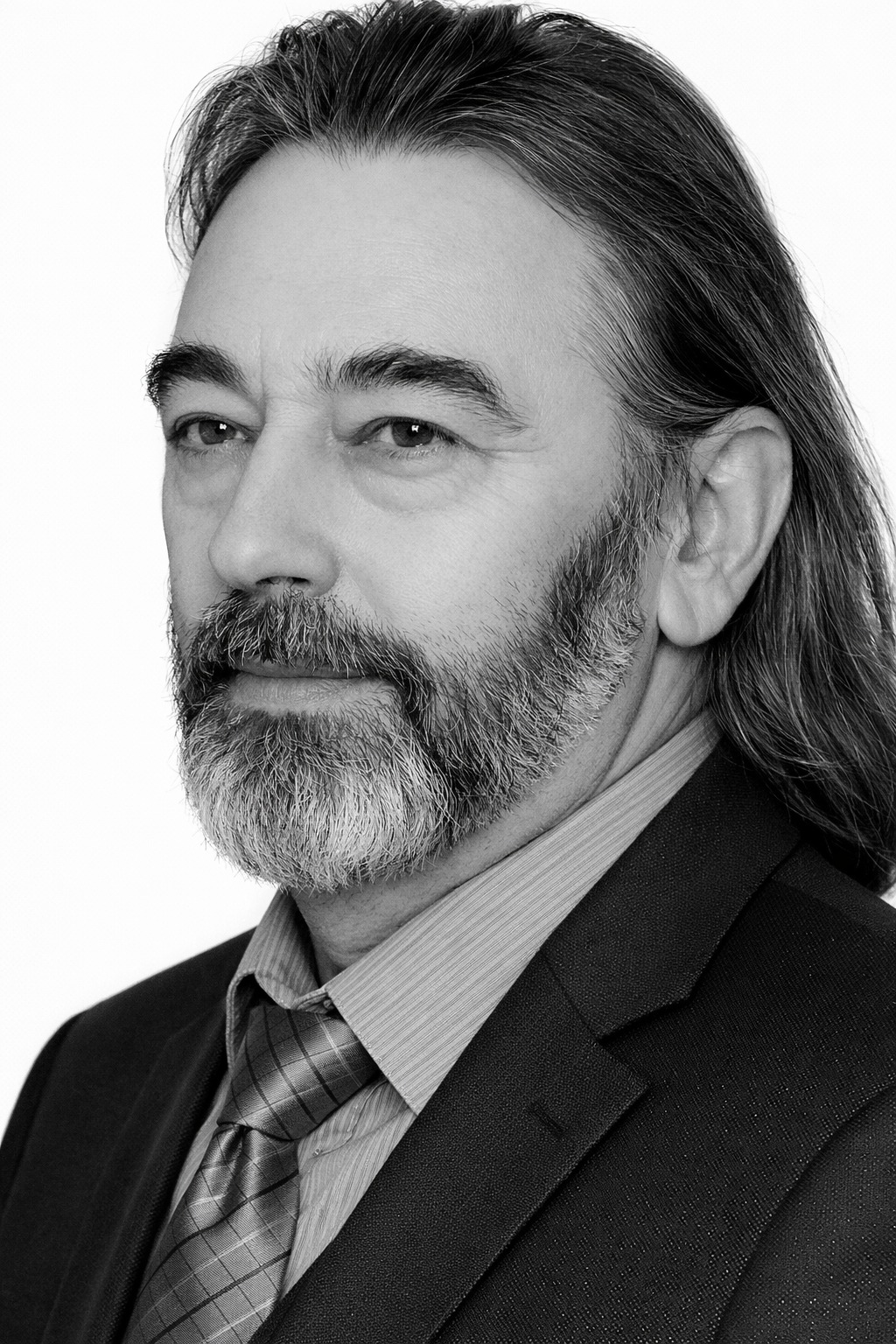
Semyon Axelrod is a former Refusenik, born and raised in the Soviet Union, where he participated in the underground human-rights movement. He led a group that assisted Soviet citizens whose applications to emigrate were denied. As a human-rights activist, he represented Jewish activists at the 1989 Conference on the Human Dimension of the Conference on Security and Cooperation in Europe in Paris—the first time in Soviet history that a non-government-affiliated individual was permitted to address an international forum. He now lives in the USA and remains active in the Jewish community.